Water Hackers in Paris

Water Hackers, discover more about the water quality of your city and prepare your dream-boat together with the designers!

For the D’DAYS in Paris, In-Progress asked to prepare an updated version of the exhibition in Bourglinster where we organised the last workshop Water Hackers. As we already started to prepare our intervention please mark your calendar for participate to the intervention or the atelier for children at Carreau du Temple.

When: Thursday 4th June 2015
Facilitators: Giacomo Piovan, Lynn Schammel + Henry Baumann
Numbers of Participants: maximum 15
Type of participants: citizens & schools etc…
Suggested Age: 12-16 years old

Water_Hackers_Ddays

Water_Hackers_Ddays2

Water_Hackers_Ddays4

Water_Hackers_Ddays5

Nuclear culture in Japan. Pt 2: Road trip through Fukushima exclusion zone

Post-Nuclear Trip in Fukushima / how soil is treated

Nicola Triscott

After my lecture at the Actinium nuclear forum in Sapporo, a group of us (Arts Catalyst team and artists with Kyoko Tachibana from our partners S-AIR) travelled by plane and bullet train to Fukushima City (located 60km from the Fukushima Daiichi nuclear plant). If we weren’t already aware of what we were heading into, this was the first thing we saw on leaving the rail station:

Geiger counter, Fukushima City Geiger counter, Fukushima City

Fukushima City was not evacuated after the disaster at the Fukushima Daiichi nuclear power plant after the earthquake and tsunami in 2011.  Fukushima City is the prefectural capital with a population of more than 280,000.

We met with Shuji Akagi, an artist and high school art teacher, who lives in Fukushima City (his work was shown in the Actinium exhibition and he spoke at the forum). Since 2011, Shuji, has been meticulously photographically documenting the decontamination of the city. He took us…

View original post 1,447 more words

In-Situ Kick-Off

The project In-Situ, a process to transform wastelands in a more participative way, has started with a kick-off event on 21st of June. In-Situ will activate the vacant and underused open spaces of the Gelatine Fabriek next to the Hasselt’s harbour. In-Situ offers a modular structure that can be adapted by local inhabitants and organisations in order to facilitate the organisation of activities and events. The focus of these actions is to generate a more open debate about the future developments of the area, on- site. The project has been developed for DiverCity, a public exhibition organised in CIAP Art Centre within the frame of DE UNIE Public Art route that will last until the 5th of October 2104. Check the project website for more info.


Screen Shot 2014-06-22 at 17.28.29 Screen Shot 2014-06-22 at 17.28.36Screen Shot 2014-06-20 at 00.25.25

Water Hackers Workshop

workshop water hackers
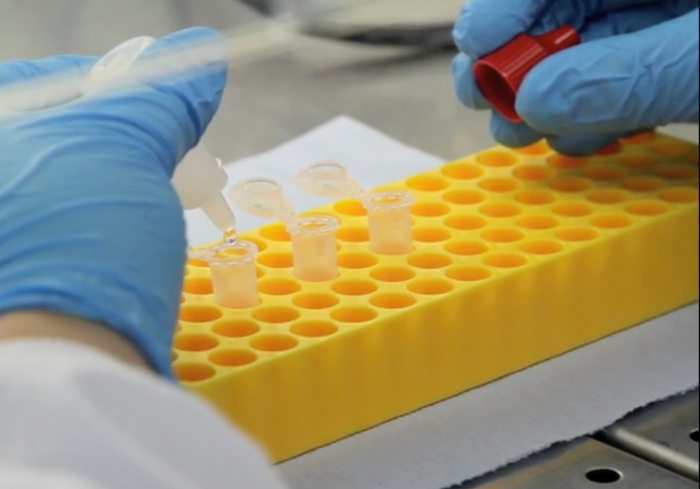
Within the frame of the in-progress exhibition in Bourglinster (Luxembourg) we have organised a workshop about our ongoing project called ‘Water Hackers’, a research for a more open water infrastructure. Water Hackers aims at innovating water infrastructure, not by reinventing it from scratch, but by connecting what is already there and hacking into society in search for concrete proposals for future models, strategies and products.
Screen Shot 2014-05-07 at 14.28.42

The project started during the last year at the Science Festival in Luxembourg where we documented the problematics of water on a video showing the bacterial contamination of the river Alzette. For this workshop we didn’t want to find the ultimate solution for our water problems but rather we focused on collecting an archive of already existing researches, concepts and activities related with water.

water tasting barWe have also experimented a ‘Water tasting’ bar for trying to detect the flavours of water from different kind of sources.

water_hackers_inprogressSome participants have used existing innovations for envisage future scenarios and products.

Workshop Table2

Thanks to this workshop we had the possibility to imagine, connect and frame new ideas coming from a multidisciplinary group. However, our aim is to give them the potential to grow by connecting with inhabitants and businesses of Luxembourg which are interested in exploring ways to stimulate small changes.

IMG_0224

Thank to the participants: Jan, Koen, Giacomo, Philippe, Lisa, Lynn, Marck and Gregor.


IN-SITU / art in public space

Plants have always fascinated me. I grow up in a small village close to the Alps, in the North-East of Italy. I still remember when at the age of eighteen my father started a garden in a vacant plot,  a ‘contrada’ we call it in Italy, a small group houses at the foot of the mountain.  During my studies in design plants become the tools to express my everyday needs while designing objects and spaces.

Immagine

IN-SITU, the project I am working at the moment, is a temporary installation that offers tools and space to transform wastelands. Transforming wastelands is a complex design process because of the inter-workings of social and economical challenges.Immagine


The project investigates alternatives to heal vacant spaces in a more participatory way. The installation includes also modular sitting facilities to enhance the accessibility and use of the vacant space by passengers and citizens. By mixing public furniture and green, local residents and site developers are invited to confront during a series of open activities like workshops, lunches, talks, etc.

Immagine


IN-SITU form part of the public art project DE UNIE, in partnership with CIAP, centre for contemporary art. The project initiated during the last year when I presented a movie about possible futures for the remediation of the many polluted areas that spot the area (see map below). The project will be located on strategic points along two main routes (red and green lines) connecting Hasselt and Genk.

Immagine


Fabulous Wastelands

We live in cities full of errors and soil contamination is one of them. Behind their intrinsic guiltiness, these contaminated sites often bear important aesthetic and identity qualities. Transforming these toxic land is difficult because the inter-workings of social, political and technical challenges. But this situation can also be the start of change for the better: awareness, concern, action. Cities are open fields for the exploration of new ways of living and they have the potential to become the best living environments that we can imagine.

Revegetation-2

Although wastelands are used in a negative connotation, I started to see a lot of potential in them because they allow the experimentation of new relationships between humans and nature. The clean up of an area is an opportunity to also regenerate the social fabric of the neighbourhood which suffer from the negative aspects of contamination. This process should not be considered only as a quick technical execution. 

“City is not a problem, city is solution.” – Jaime Lerner

There are remarkable examples of how participative design practices can be an agent for urban transformation. Soil Kitchen by FutureFarmers was a temporary public art project that rehabilitated an abandoned building into a multifunctional space where citizens could participate in ecological activities in exchange of soil samples of their gardens. The field guide to phytoremediation of You are the city is an other example of encouraging citizens to transform vacant plots.

scaffolding_concept

“We need to start out from an open playing field and making a case for ‘not knowing’, not assuming to know what the outcome might be”

Engagement is sublimated by autonomy. So we can use autonomy to improve and transform. In a recent interview Tatjana Schneider suggested methods to envisage users of space becoming active actors. The key thing is for designers to bring a holistic approach to their designs for spaces that include cultural, economic, ecological and even spiritual components and to make this process visible and physical. In this way, I started to look of how empower local persons who care about their environment in order to imagine new possibilities to use these areas. Therefore, supporting strategic interventions in these polluted areas could generate interesting scenarios because the collaborative endeavour of testing, planting, and maintaining the plants re-builds a sense of ownership and social investment among residents and other actors involved in this multi-year process. 

Workshop Differdange

A workshop in Differdange poses a timely challenge: when innovation by such complex issues as up-cycling, mobility , environment or space industry are balanced the desire to do something positive, with the need to understand the back story and the future innovation before we intervene?

workshop

The event has been organised in the creative hub 1535 C by the University of Luxembourg (Kilian Gericke) and Luxinnovation (Jan Glas) for the students of the Certificate in Sustainable Development and Social Innovation Course. The event has asked four design companies to pose a question and further develop solutions using a typical charette.  For our group we worked around the question “Can we imagine new scenario to transform wasteland together?”.

Taking the area as a case study, the results of the workshop leaded to two scenarios of requalification of the polluted land by means of phytoremediation. After having understood the environmental and social challenges of the area we started to build a scenario with scrap materials collected around the factory. The participants were particularly attracted on connecting the heritage of the steel factory with educational facilities and green touristic routes for the benefit of the locals.  The most encouraging feature of the workshop is that it posed new questions on the project and without pre-packaged solutions. In that sense, it passes a key to use more what is already there.

DSCN9613

Farming Pollution System / Triennial of Design in Flanders

Farming Pollution System  has been developed during 2013 in the Belgian region of Limburg with the intent of developing a design system to clean up soil pollution.

The project is on show during Conflict&Design, Triennial of Design in Flanders,  C-Mine, Genk. From the 15th December 2013 to 9th March 2014.

Farming Pollution-System in short:

Conflict: 10% of the 450,000 home oil tanks used for heating purposes in Flanders leak because of corrosion.
Design: A system that empower people to clean their soil by means of phytoremediation, a method whereby plants and microorganisms are activated to clean polluted ground.

CONFLICT_AND_DESIGN_2013_KVRANCKEN_6422triennale3

Triennial for Design in Flanders / Exhibition

Triennial

For the 7th Design Triennial in Flanders we are invited from curator Kurt Van Belleghem to exhibit our latest developments in the Farming Pollution System. We will show a visualization of how the application could be implemented in small urban spaces.

Conflict & Nature: Farming Pollution System, a landscape strategy for  soil contaminaton.

14th December 2013 – 2nd March, 2014

@ C-Mine 12, Genk (BE).

More info : http://www.conflictanddesign.be/

‘IT’S ALL IN THE AIR’ / Exhibition

facebook_toegepast

‘IT’S ALL IN THE AIR’ is an exhibition for young designers organized by Design Platform Limburg and Z33 Art Center. For this 18th edition, Toegepast gathers six young designers. I will present Farming Pollution Movie  is a work that might seems dreamy, but more than ever, it stand with both feet in reality. The movie focuses on interesting social problems connected with soil pollution revealing hidden values of a region exploited by industries.

Other participants: Mats Horbach, Henry Baumann, Pieter-Jan Peter, Mattijs Brands, Isa Tez.

From 12/10/2013 to 19/01/2014

Bacteria Experiment

Bacteria Experiment

Water Remediation experiments. The same contaminated water has been in contact with a different amount of healing microorganisms. It’s interesting to see this empirical reaction…  the color gives an idea of what is happening:  In the green bucket, for instance, we sow algae growing.  A clear sign that life is happening!

Team Experts for Business Concept

scenario_bootcamp

After the start with Creative Class, the Farming  Pollution System is in progress during the Sustainable Bootcamp, a training program that supports the realization of ideas towards an entrepreneurial approach. Together with a team of experts, we are developing a system that mix business, scientific development and social service for the definition of a new strategy to clean soil pollution in small residential areas. This concept is developed after having understood that many landowners  are neglected from the possibility to clean their proprieties due to high price of traditional methodologies.

sustainable-bootcamp4

We believe that soon research on phytoremediation will be applied in the real world by combining bottom-up local efforts with top-down institutional development. In order to define a scenario we use an interdisciplinary approach that combines expertises of designers, scientists, engineers and civil services.

sustainable bootcamp 1

People / Ex-Miners

IMG_8861

If you are Italian, and you happen to walk along the streets of Genk (BE) , you would notice that there are many familiar faces around you. The city , which I firstly get know during the last edition of Manifesta, has an high percentage of Italian emigrants that came here during the 2oth century looking for a stable work.  I had the possibility to hear the story of  Luciano Furia, born in Tuscany in 1933 and, only eighteen years old, moved here for working in the Waterschei mine complex. The “Mina” (how they used to call it) has been everything for these people. As he showed to me, Luciano’s working permit has changed from B (working under the soil level) to A ( work on the surface) only after four years of hard work.

IMG_8867

Since many years after the retirement Luciano had health problems derived from coal exposoure, today this disaese constricts him to live at home close to its oxygen mask. Among his companions Luciano is one of the last people survived, many of them, died by  intoxication and tumors. This story make me reflect about the importance of our environment and how it could affect our society.

IMG_8880ss

Production Scenario

gas_scenario_mix copy

Using the significance of a landscape in transformation, the former Limburgs industrial region is an ideal context for turning pollution into a resource. In relation to the production part of Phytoremediation, how can we make use of the plant waste?  The project intention is to investigates potential uses of the vegetation as a resource finding smaller scale, cost-effective approaches to the problem without forcing the economical sector to drastic changes ( the so called “Gentle Reconversion”).


genk-reason
The output of this research will be tested in a variety of uses for create a new ecologic productions like:

  1. new compostable materials
  2. biofuel crops production
  3.  wood gasification.

I believe in  a new model of transportation and I am now looking to petrol stations as a case study because they are areas with specific pollution (organic compounds) and accessible public-private space.

gasstation_scenario

Critical Practice / The Yes Men

theyesman

Andy Bichlbaum and Mike Bonanno are fundamentally two guys who like dress up as spokesmen of big multinationals in order to give fake interviews to media like BBC World. In this video – showed during “Mind the System, Find the Gap” @ Z33  – the “The Yes Men” uses humour, truth and criticism to bring media attention to the crimes DOW Chemicals has committed. Though neither the company ever took responsibility for the catastrophe, the actor mentions that the company has finally decided to cleaning up the contaminated soil.

In few hours the information had become world news. DOW lost 2 billion dollars in the Stock Market and had to respond to its polluting practices in the city of Bhopal (India). A question arises: Why they don’t get arrested for that? Please, have a look to the famous story of MCLiebel, a former postman & a gardener that have taken McDonald’s to the Court for its bad activities (rainforest destruction, food poisoning and falsely advertises). It looks like both of the cases are in the category David VS Goliath…  so, this method might successfully be used to arises serious challenges to the eyes of public opinion.

Remediation / Case-study

IMG_8925

Last Monday I had the possibility to assist for the first time to an experimental plantation of phytoremediation in Limburg. It was finally exiting to see in practice how to apply the methodology! Since more then 20 years the residential area has been contaminated by an oil spill coming from a tank to heat a row-house. Unfortunately the family that owned the soil could not afford the cost for a traditional remediation that could cost them more then 300 thousands Euros. A soil pollution consultant has offered to re-vegetate their garde with some willows. The yellow tubes are for inoculate the root system with particular bacteria coming from the soil. In this way the plantation could grow without suffering from the contamination. The remediaton took place very quickly in only an afternoon resulting in a cost of less then a couple thousands Euro. (but this case was funded by a governmental project). In the future the site will be monitored and hopefully in few years the subsoil will be cleaned up. I book a place for this moment!

This slideshow requires JavaScript.

Bacterias help trees to eat pollution

FarmingPollution_process4I have been for an interview with Prof. Jaco Vangronsveld, director of the Centre for Environmental Sciences at the Hasselt University. He has been involved in several phytoremediation projects since 1990 especially in The Campine area (BE) were historical pollution reached an extensive area of more then 700 square Km. After having focused in metals remediation (with significant results obtained with the use of poplar tree and tobacco) he focused his research centre on organic contaminants remediation using symbiosis wuth bacteria. Accordingly, Vangronsveld is studying how a tree can merge forces together with microbial’s powerful proprieties.

IMG_6863

Accordingly, some Carbon-based bacteria have a great ability to transform organic contaminants (like petrol and gasoline) in innocuous CO 2 + water. This process is much faster that previus phytoremediation methods, it already takes place in a rapid period from 12 to 48 hours. Plant roots are inoculated with bacteria for improving their healing effects in contaminated soil. This is the example of a plant that is enhanced with bacteria tubes that reach the rooting system (see the model above). If the transpiration of organic pollutants to the atmosphere is limited, bacteria-plant symbiosis would be able to define new standards in phytoremediation methods. In conclusion we can say that the most promising frontiers for remediate organic compounds can be defined in one word: symbiosis.

Mapping the Invisible Pollution

luchtfoto perspectiefThe idea of Farming the Pollution has sparked out a year ago while I was digging into my backyard for setting a vegetable garden.  Later on I become aware that concentrations of heavy metals have not only destructive consequences for the ecosystem, but also health effects for humans. In this sense, soil contamination is a form of invisible pollution. Accordingly with the national agency for waste (OVAM) over 27,000 parcels of land have been evaluated for soil pollution in Flanders since 1995. This organization makes available the reports for download for the cost of  100 € per cases accordingly with their website. Even if already existing analysis are shared in the public governmental associations often lack of a simple, transparent tool for everyday citzens. 

 Therefore I have developed a tool to make soil pollution analysis open-source and more available by the common user. Accordingly I have set-up a personal Map that empower people to analyse their own enviroment and encourage grassroots initiatives for starting the clean-up of a site.  Google Maps provides the most simple way. (Here I have uploaded own datas about a case study in Eindhoven).

Finally, initiatives like BrickStarer and MindLab are positive examples of open-source mapping. In the future I would like to use this potential digital tool to share the project’s phases of analysis and remediation.